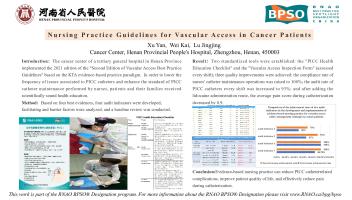
The incidence of PICC catheter-related complications can be decreased, patients' quality of life during the catheterization period can be improved, and patients' pain during the catheterization process can be effectively reduced by implementing evidence-based nursing practice, forming an assessment team for vascular access devices, managing PICCs, educating tumor patients about health issues, and standardizing the nursing of PICCs.
Introduction:The cancer center of a tertiary general hospital in Henan Province implemented the 2021 edition of the "Second Edition of Vascular Access Best Practice Guidelines" based on the KTA evidence-based practice paradigm. In order to lower the frequency of issues associated to PICC catheters and enhance the standard of PICC catheter maintenance performed by nurses, patients and their families received scientifically sound health education.Method:Based on four best evidences, four audit indicators were developed, facilitating and barrier factors were analyzed, and a baseline review was conducted.Result:Two standardized tools were established: the "PICC Health Education Checklist" and the "Vascular Access Inspection Form" (assessed every shift); three quality improvements were achieved: the compliance rate of nurses' catheter maintenance operations was raised to 100%; the audit rate of PICC catheters every shift was increased to 93%; and after adding the lidocaine administration route, the average pain score during catheterization decreased by 0.9.Conclusion:Evidence-based nursing practice can reduce PICC catheterrelated complications, improve patient quality of life, and effectively reduce pain during catheterization.
| Attachment | Size |
|---|---|
| 主题2-肿瘤中心-肿瘤患者血管通路最佳指南的循证护理实践修改后.pdf (1.13 MB) | 1.13 MB |